


Nature - 2019 July - Vol 571 No 7765
Publisher: Nature
Format: Paperback
ISBN: 9770028083095
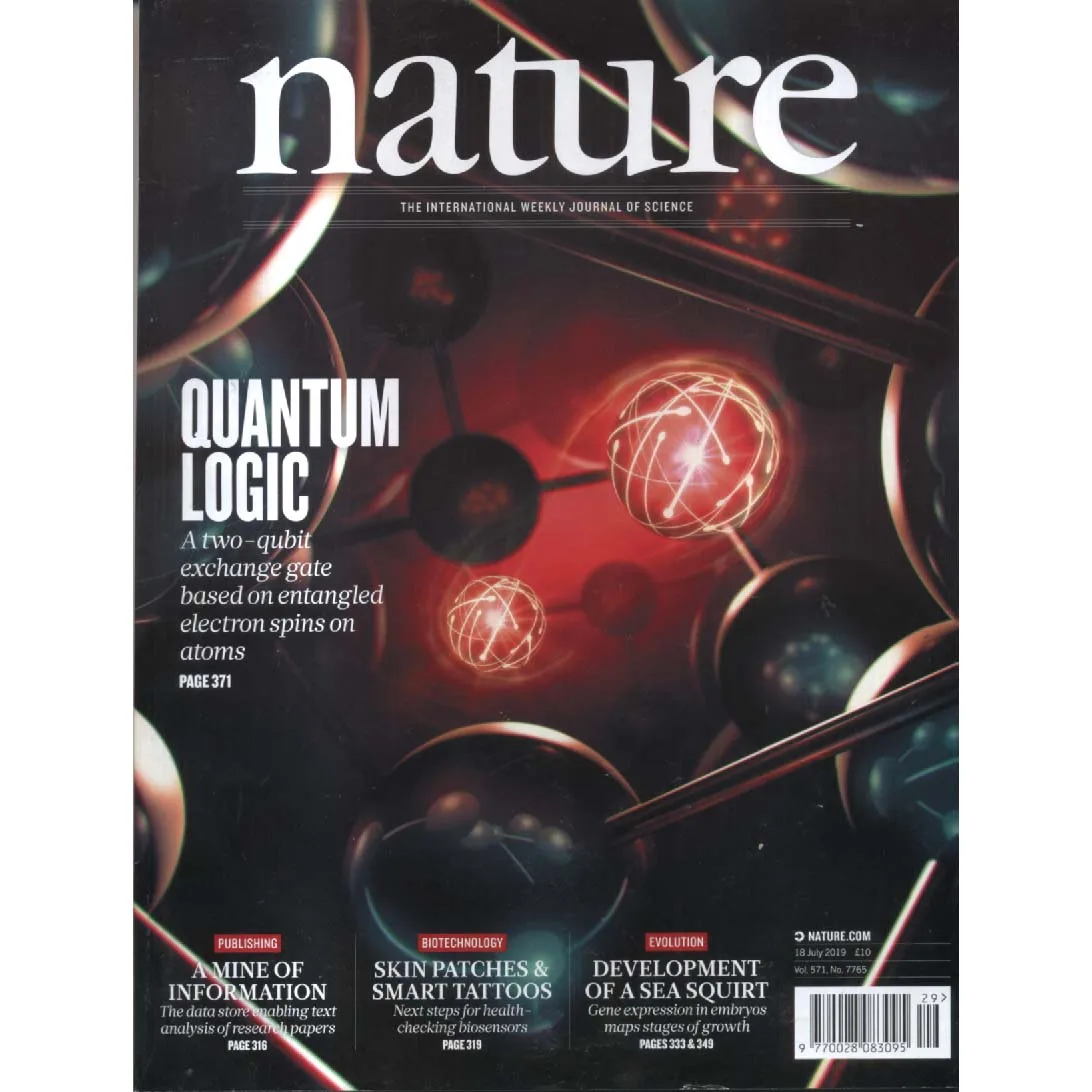
There are magazines that casually discuss current affairs, and then there is Nature, calmly announcing QUANTUM LOGIC on its cover while presenting glowing entangled particles like props from an impossibly expensive science-fiction film. Nature – July 2019, Vol. 571 No. 7765 captures modern scientific civilisation at its most wonderfully intimidating.
The cover artwork alone is magnificent. Luminous atomic structures hover inside dark molecular frameworks like the control room of a futuristic reactor moments before someone says, “The calculations were correct… mostly.” The imagery radiates pure high-level scientific confidence — the sort possessed by people who casually use phrases like “two-qubit exchange gate” in conversation without noticing other humans quietly backing away.
And naturally, Nature presents all this with total composure.
The headline feature explores quantum logic and entangled electron spins on atoms, meaning humanity has officially reached the stage where ordinary computing is no longer sufficiently ambitious. Classical logic apparently seemed too simple, so scientists decided to begin manipulating the deeply strange behaviour of subatomic reality itself.
Meanwhile, most people still struggle to connect printers to Wi-Fi.
Elsewhere in the issue:
-
biotechnology researchers investigate skin patches and “smart tattoos” for health monitoring,
-
evolutionary biologists map embryo development in sea squirts,
-
and publishing experts analyse enormous research-data archives,
which collectively creates the overwhelming impression that the future arrived quietly sometime around 2019 while nobody was fully paying attention.
The smart tattoo article is especially marvellous because it perfectly embodies modern science’s tendency to turn speculative cyberpunk concepts into entirely reasonable medical technologies within about fifteen years. Humanity increasingly develops inventions that sound absurd right up until researchers calmly demonstrate working prototypes in respected journals.
One of the great pleasures of old Nature issues is seeing how many once-futuristic ideas were already emerging beneath the surface years ago. Quantum computing, wearable biosensors, massive research databases — all now feel central to contemporary technological culture, yet here they appear in their slightly earlier, more experimental form, before becoming mainstream talking points.
And through it all, Nature maintains its wonderfully restrained editorial tone. There is something deeply amusing about scientific journals discussing reality-altering technologies with the same emotional intensity most people reserve for reviewing garden equipment. Entire computational paradigms may be changing forever, but the typography remains tasteful and the peer review process continues without drama.
The visual culture of Nature deserves enormous admiration too. Scientific illustration has evolved into accidental conceptual art. Quantum particles glow like sacred objects. Molecular systems resemble futuristic architecture. Biotechnology increasingly looks like luxury design. One could frame this cover and convince visitors it represented a gallery exhibition called Post-Human Systems of Light and Control.
In fairness, it essentially does.
Physically, this issue radiates advanced intellectual seriousness. One imagines it originally sitting in:
-
university physics departments,
-
quantum computing laboratories,
-
biotech startups,
-
or on the desks of researchers capable of understanding subatomic mechanics before their second coffee.
Yet now it survives as both scientific publication and historical artefact from a fascinating threshold moment — a world beginning to transition from conventional digital technology into the stranger realities of AI, quantum systems and biological integration.
Condition-wise, this copy is listed as Good, meaning it has survived admirably despite likely exposure to research desks, crowded laboratories and perhaps at least one owner who confidently opened the quantum computing article before realising they might require several additional years of physics education.
Today, Nature – July 2019, Vol. 571 No. 7765 stands as a brilliant snapshot of late-2010s scientific ambition: elegant, futuristic and quietly documenting humanity’s increasingly surreal relationship with technology and reality itself.
An excellent acquisition for science enthusiasts, collectors of modern academic ephemera, quantum-computing admirers or anyone who enjoys magazines capable of making them feel simultaneously fascinated, inspired and profoundly underqualified.
Keep browsing: See more Nature Journal books Other books by Nature
